
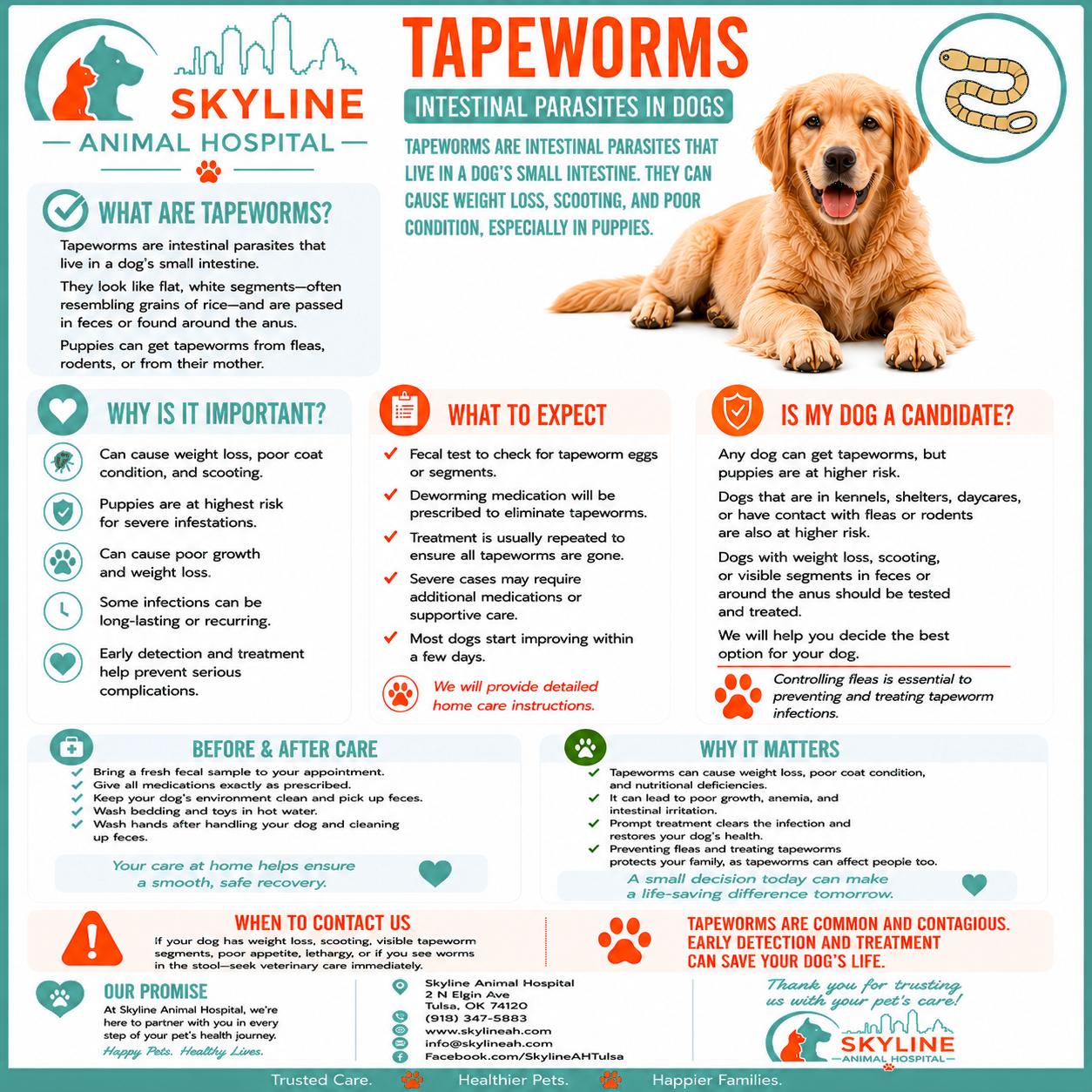
Intestinal Parasites in Dogs
Tapeworms are intestinal parasites that live in a dog’s small intestine. They can cause weight loss, scooting, and poor condition, especially in puppies.
What Are Tapeworms?
Tapeworms are intestinal parasites that live in a dog’s small intestine.
They look like flat, white segments, often resembling grains of rice, and are passed in feces or found around the anus.
Dogs and puppies get tapeworms by swallowing infected fleas or by eating rodents or other infected animals.
Why Is It Important?
- Can cause weight loss, poor coat condition, and scooting.
- Puppies are at highest risk for severe infestations.
- Can cause poor growth and weight loss.
- Some infections can be long-lasting or recurring.
- Early detection and treatment help prevent serious complications.
What to Expect
- Fecal test to check for tapeworm eggs or segments.
- Deworming medication will be prescribed to eliminate tapeworms.
- Treatment is usually repeated to ensure all tapeworms are gone.
- Severe cases may require additional medications or supportive care.
- Most dogs start improving within a few days.
We will provide detailed home care instructions.
Is My Dog a Candidate?
Any dog can get tapeworms, but puppies are at higher risk.
Dogs that are in kennels, shelters, daycares, or have contact with fleas or rodents are also at higher risk.
Dogs with weight loss, scooting, or visible segments in feces or around the anus should be tested and treated.
We will help you decide the best option for your dog.
Controlling fleas is essential to preventing and treating tapeworm infections.
Before & After Care
- Bring a fresh fecal sample to your appointment.
- Give all medications exactly as prescribed.
- Keep your dog’s environment clean and pick up feces.
- Wash bedding and toys in hot water.
- Wash hands after handling your dog and cleaning up feces.
Your care at home helps ensure a smooth, safe recovery.
Why It Matters
- Tapeworms can cause weight loss, poor coat condition, and nutritional deficiencies.
- They can lead to poor growth, anemia, and intestinal irritation.
- Prompt treatment clears the infection and restores your dog’s health.
- Preventing fleas and treating tapeworms protects your family, as tapeworms can affect people too.
A small decision today can make a life-saving difference tomorrow.
When to Contact Us
If your dog has weight loss, scooting, visible tapeworm segments, poor appetite, lethargy, or if you see worms in the stool, seek veterinary care immediately.
Call us at (918) 347-5883 or request an appointment. Learn more about flea and tick prevention.
Tapeworms are common and contagious. Early detection and treatment can save your dog’s life.