
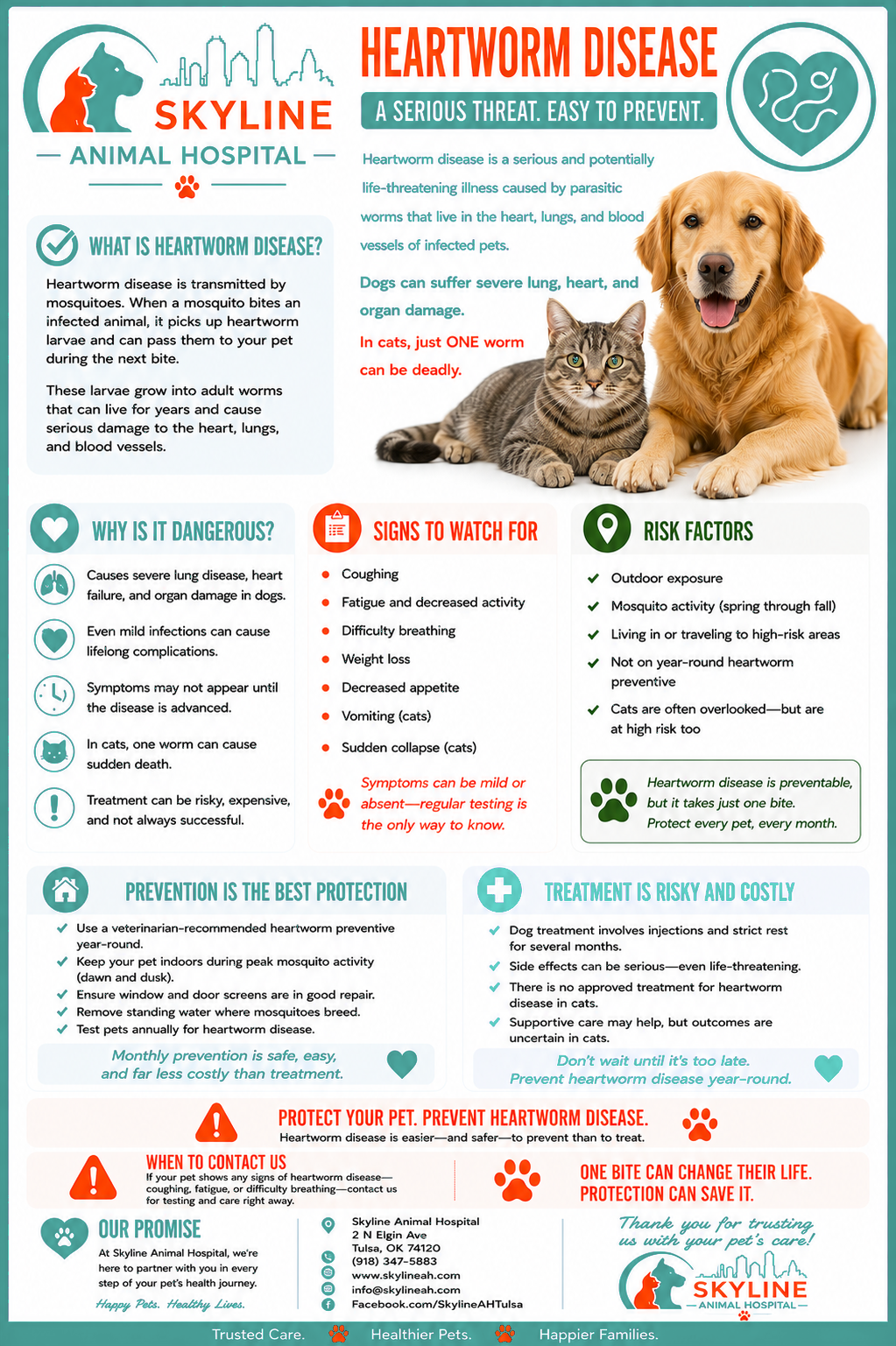
A Serious Threat. Easy to Prevent.
Heartworm disease is a serious and potentially life-threatening illness caused by parasitic worms that live in the heart, lungs, and blood vessels of infected pets.
Dogs can suffer severe lung, heart, and organ damage. In cats, just one worm can be deadly.
What Is Heartworm Disease?
Heartworm disease is transmitted by mosquitoes. When a mosquito bites an infected animal, it picks up heartworm larvae and can pass them to your pet during the next bite.
These larvae grow into adult worms that can live for years and cause serious damage to the heart, lungs, and blood vessels.
Why Is It Dangerous?
- Causes severe lung disease, heart failure, and organ damage in dogs.
- Even mild infections can cause lifelong complications.
- Symptoms may not appear until the disease is advanced.
- In cats, one worm can cause sudden death.
- Treatment can be risky, expensive, and not always successful.
Signs to Watch For
- Coughing
- Fatigue and decreased activity
- Difficulty breathing
- Weight loss
- Decreased appetite
- Vomiting (cats)
- Sudden collapse (cats)
Symptoms can be mild or absent. Regular testing is the only way to know.
Risk Factors
- Outdoor exposure
- Mosquito activity (spring through fall)
- Living in or traveling to high-risk areas
- Not on year-round heartworm preventive
- Cats are often overlooked, but are at high risk too
Heartworm disease is preventable, but it takes just one bite. Protect every pet, every month.
Prevention Is the Best Protection
- Use a veterinarian-recommended heartworm preventive year-round.
- Keep your pet indoors during peak mosquito activity (dawn and dusk).
- Ensure window and door screens are in good repair.
- Remove standing water where mosquitoes breed.
- Test pets annually for heartworm disease.
Monthly prevention is safe, easy, and far less costly than treatment.
Treatment Is Risky and Costly
- Dog treatment involves injections and strict rest for several months.
- Side effects can be serious, even life-threatening.
- There is no approved treatment for heartworm disease in cats.
- Supportive care may help, but outcomes are uncertain in cats.
Don’t wait until it’s too late. Prevent heartworm disease year-round.
When to Contact Us
If your pet shows any signs of heartworm disease, such as coughing, fatigue, or difficulty breathing, contact us for testing and care right away. Heartworm disease is easier, and safer, to prevent than to treat.
Call us at (918) 347-5883, request an appointment, or order preventives from our online pharmacy.
Protect your pet. Prevent heartworm disease. One bite can change their life. Protection can save it.