
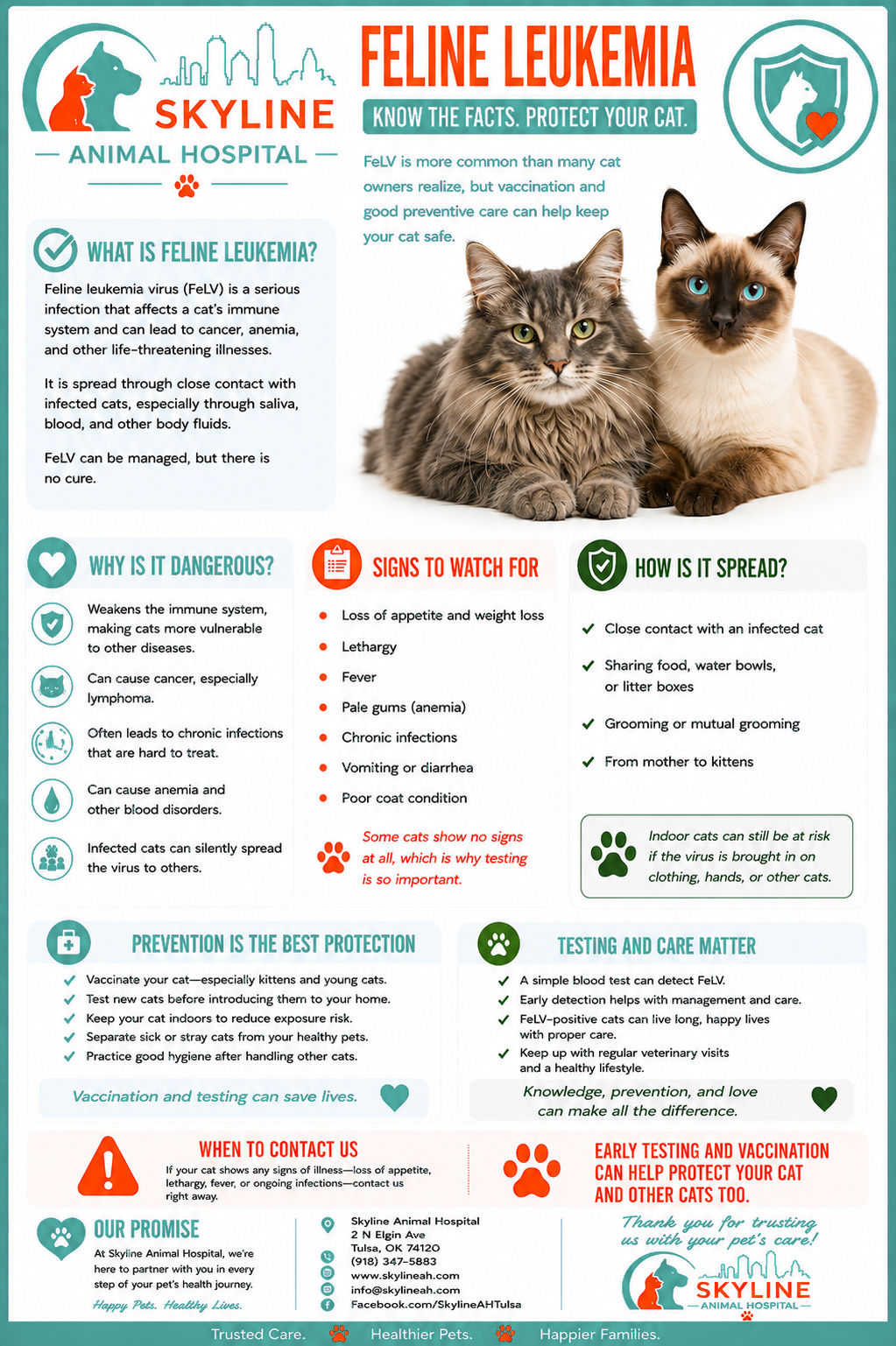
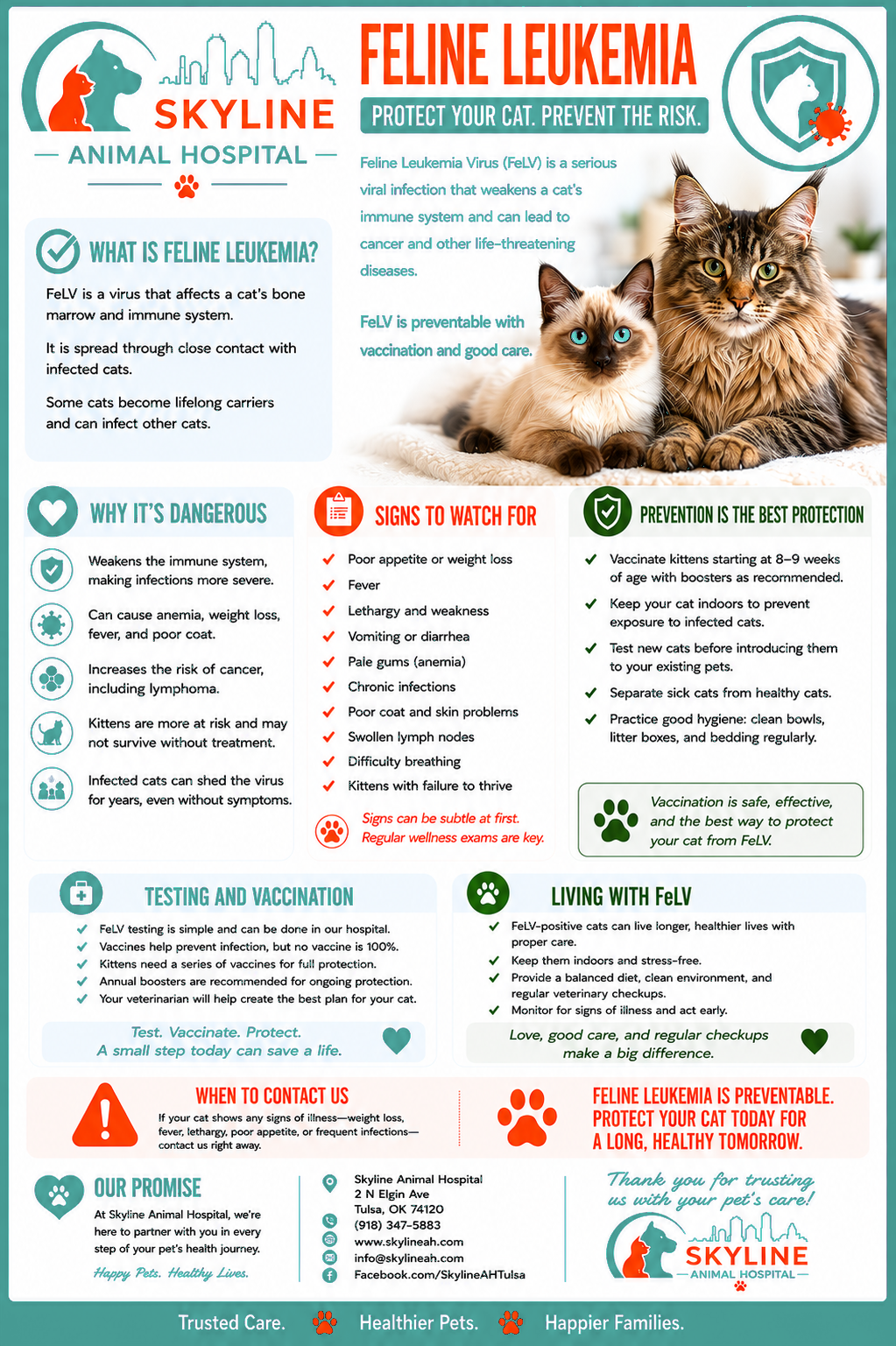
Know the Facts. Protect Your Cat. Prevent the Risk.
Feline leukemia virus (FeLV) is a serious viral infection that weakens a cat’s immune system and can lead to cancer and other life-threatening diseases.
FeLV is more common than many cat owners realize, but it is preventable with vaccination and good preventive care.
What Is Feline Leukemia?
Feline leukemia virus (FeLV) is a serious infection that affects a cat’s bone marrow and immune system and can lead to cancer, anemia, and other life-threatening illnesses.
It is spread through close contact with infected cats, especially through saliva, blood, and other body fluids. Some cats become lifelong carriers and can infect other cats.
FeLV can be managed, but there is no cure.
Why It’s Dangerous
- Weakens the immune system, making cats more vulnerable to other diseases and making infections more severe.
- Can cause cancer, especially lymphoma.
- Often leads to chronic infections that are hard to treat.
- Can cause anemia, weight loss, fever, poor coat, and other blood disorders.
- Kittens are more at risk and may not survive without treatment.
- Infected cats can shed the virus for years, even without symptoms.
Signs to Watch For
- Poor appetite or weight loss
- Fever
- Lethargy and weakness
- Vomiting or diarrhea
- Pale gums (anemia)
- Chronic infections
- Poor coat and skin problems
- Swollen lymph nodes
- Difficulty breathing
- Kittens with failure to thrive
Some cats show no signs at all, which is why testing and regular wellness exams are so important.
How Is It Spread?
- Close contact with an infected cat
- Sharing food, water bowls, or litter boxes
- Grooming or mutual grooming
- From mother to kittens
Indoor cats can still be at risk if the virus is brought in on clothing, hands, or other cats.
Prevention Is the Best Protection
- Vaccinate kittens starting at 8 to 9 weeks of age, with boosters as recommended.
- Keep your cat indoors to prevent exposure to infected cats.
- Test new cats before introducing them to your existing pets.
- Separate sick or stray cats from your healthy pets.
- Practice good hygiene: clean bowls, litter boxes, and bedding regularly, and wash up after handling other cats.
Vaccination is safe, effective, and the best way to protect your cat from FeLV.
Testing and Vaccination
- FeLV testing is a simple blood test and can be done in our hospital.
- Early detection helps with management and care.
- Vaccines help prevent infection, but no vaccine is 100%.
- Kittens need a series of vaccines for full protection.
- Annual boosters are recommended for ongoing protection.
- Your veterinarian will help create the best plan for your cat.
Test. Vaccinate. Protect. A small step today can save a life.
Living With FeLV
- FeLV-positive cats can live long, happy lives with proper care.
- Keep them indoors and stress-free.
- Provide a balanced diet, clean environment, and regular veterinary checkups.
- Monitor for signs of illness and act early.
Knowledge, prevention, and love can make all the difference.
When to Contact Us
If your cat shows any signs of illness, such as weight loss, loss of appetite, lethargy, fever, or frequent or ongoing infections, contact us right away.
Call us at (918) 347-5883 or request an appointment.
Feline leukemia is preventable. Early testing and vaccination can help protect your cat, and other cats too.