
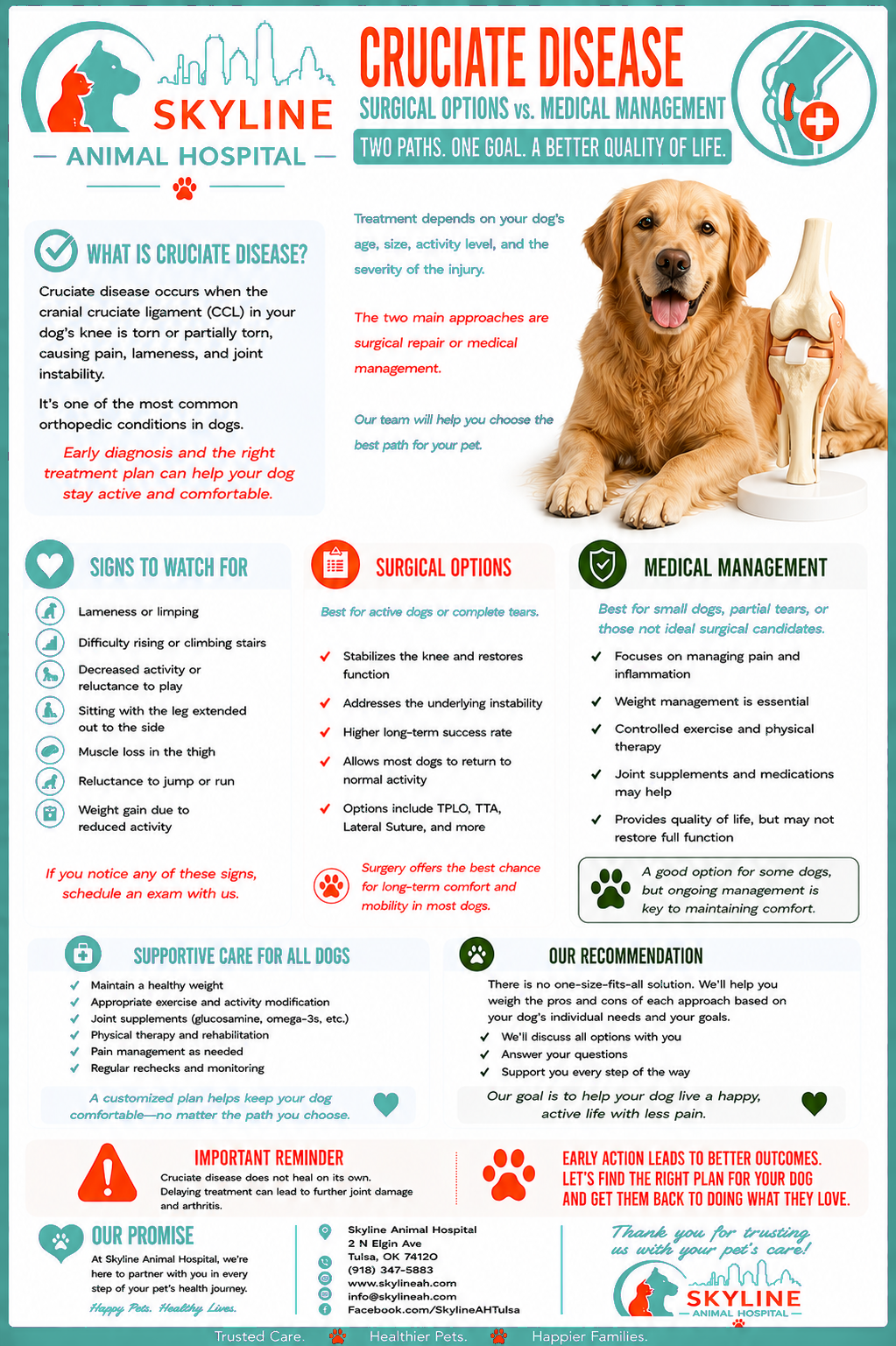
Surgical Options vs. Medical Management. Two Paths. One Goal. A Better Quality of Life.
Treatment depends on your dog’s age, size, activity level, and the severity of the injury.
The two main approaches are surgical repair or medical management. Our team will help you choose the best path for your pet.
What Is Cruciate Disease?
Cruciate disease occurs when the cranial cruciate ligament (CCL) in your dog’s knee is torn or partially torn, causing pain, lameness, and joint instability.
It’s one of the most common orthopedic conditions in dogs.
Early diagnosis and the right treatment plan can help your dog stay active and comfortable.
Signs to Watch For
- Lameness or limping
- Difficulty rising or climbing stairs
- Decreased activity or reluctance to play
- Sitting with the leg extended out to the side
- Muscle loss in the thigh
- Reluctance to jump or run
- Weight gain due to reduced activity
If you notice any of these signs, schedule an exam with us.
Surgical Options
Best for active dogs or complete tears.
- Stabilizes the knee and restores function
- Addresses the underlying instability
- Higher long-term success rate
- Allows most dogs to return to normal activity
- Options include TPLO, TTA, Lateral Suture, and more
Surgery offers the best chance for long-term comfort and mobility in most dogs.
Medical Management
Best for small dogs, partial tears, or those not ideal surgical candidates.
- Focuses on managing pain and inflammation
- Weight management is essential
- Controlled exercise and physical therapy
- Joint supplements and medications may help
- Provides quality of life, but may not restore full function
A good option for some dogs, but ongoing management is key to maintaining comfort.
Supportive Care for All Dogs
- Maintain a healthy weight
- Appropriate exercise and activity modification
- Joint supplements (glucosamine, omega-3s, etc.)
- Physical therapy and rehabilitation
- Pain management as needed
- Regular rechecks and monitoring
A customized plan helps keep your dog comfortable, no matter the path you choose.
Our Recommendation
There is no one-size-fits-all solution. We’ll help you weigh the pros and cons of each approach based on your dog’s individual needs and your goals.
- We’ll discuss all options with you
- Answer your questions
- Support you every step of the way
Our goal is to help your dog live a happy, active life with less pain.
Important Reminder
Cruciate disease does not heal on its own. Delaying treatment can lead to further joint damage and arthritis.
Call us at (918) 347-5883 or request an appointment. Learn about our surgery services.
Early action leads to better outcomes. Let’s find the right plan for your dog and get them back to doing what they love.