
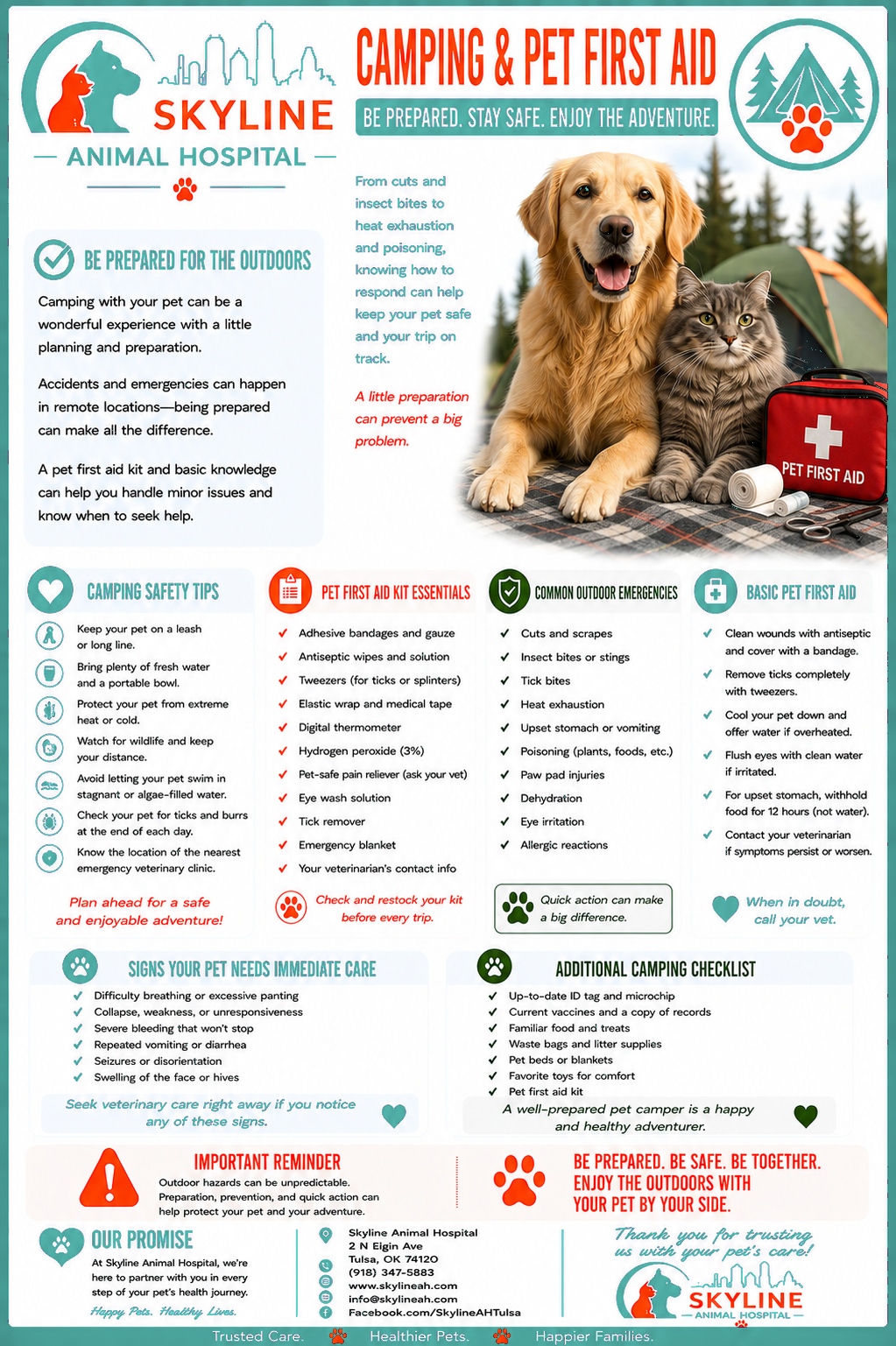
Be Prepared. Stay Safe. Enjoy the Adventure.
From cuts and insect bites to heat exhaustion and poisoning, knowing how to respond can help keep your pet safe and your trip on track.
A little preparation can prevent a big problem.
Be Prepared for the Outdoors
Camping with your pet can be a wonderful experience with a little planning and preparation.
Accidents and emergencies can happen in remote locations, so being prepared can make all the difference.
A pet first aid kit and basic knowledge can help you handle minor issues and know when to seek help.
Camping Safety Tips
- Keep your pet on a leash or long line.
- Bring plenty of fresh water and a portable bowl.
- Protect your pet from extreme heat or cold.
- Watch for wildlife and keep your distance.
- Avoid letting your pet swim in stagnant or algae-filled water.
- Check your pet for ticks and burrs at the end of each day.
- Know the location of the nearest emergency veterinary clinic.
Plan ahead for a safe and enjoyable adventure!
Pet First Aid Kit Essentials
- Adhesive bandages and gauze
- Antiseptic wipes and solution
- Tweezers (for ticks or splinters)
- Elastic wrap and medical tape
- Digital thermometer
- Hydrogen peroxide (3%)
- Pet-safe pain reliever (ask your vet)
- Eye wash solution
- Tick remover
- Emergency blanket
- Your veterinarian’s contact info
Check and restock your kit before every trip.
Common Outdoor Emergencies
- Cuts and scrapes
- Insect bites or stings
- Tick bites
- Heat exhaustion
- Upset stomach or vomiting
- Poisoning (plants, foods, etc.)
- Paw pad injuries
- Dehydration
- Eye irritation
- Allergic reactions
Quick action can make a big difference.
Basic Pet First Aid
- Clean wounds with antiseptic and cover with a bandage.
- Remove ticks completely with tweezers.
- Cool your pet down and offer water if overheated.
- Flush eyes with clean water if irritated.
- For upset stomach, withhold food for 12 hours (not water).
- Contact your veterinarian if symptoms persist or worsen.
When in doubt, call your vet.
Signs Your Pet Needs Immediate Care
- Difficulty breathing or excessive panting
- Collapse, weakness, or unresponsiveness
- Severe bleeding that won’t stop
- Repeated vomiting or diarrhea
- Seizures or disorientation
- Swelling of the face or hives
Seek veterinary care right away if you notice any of these signs.
Additional Camping Checklist
- Up-to-date ID tag and microchip
- Current vaccines and a copy of records
- Familiar food and treats
- Waste bags and litter supplies
- Pet beds or blankets
- Favorite toys for comfort
- Pet first aid kit
A well-prepared pet camper is a happy and healthy adventurer.
Important Reminder
Outdoor hazards can be unpredictable. Preparation, prevention, and quick action can help protect your pet and your adventure.
Before your trip, call us at (918) 347-5883 to make sure vaccines and preventives are up to date.
Be prepared. Be safe. Be together. Enjoy the outdoors with your pet by your side.