
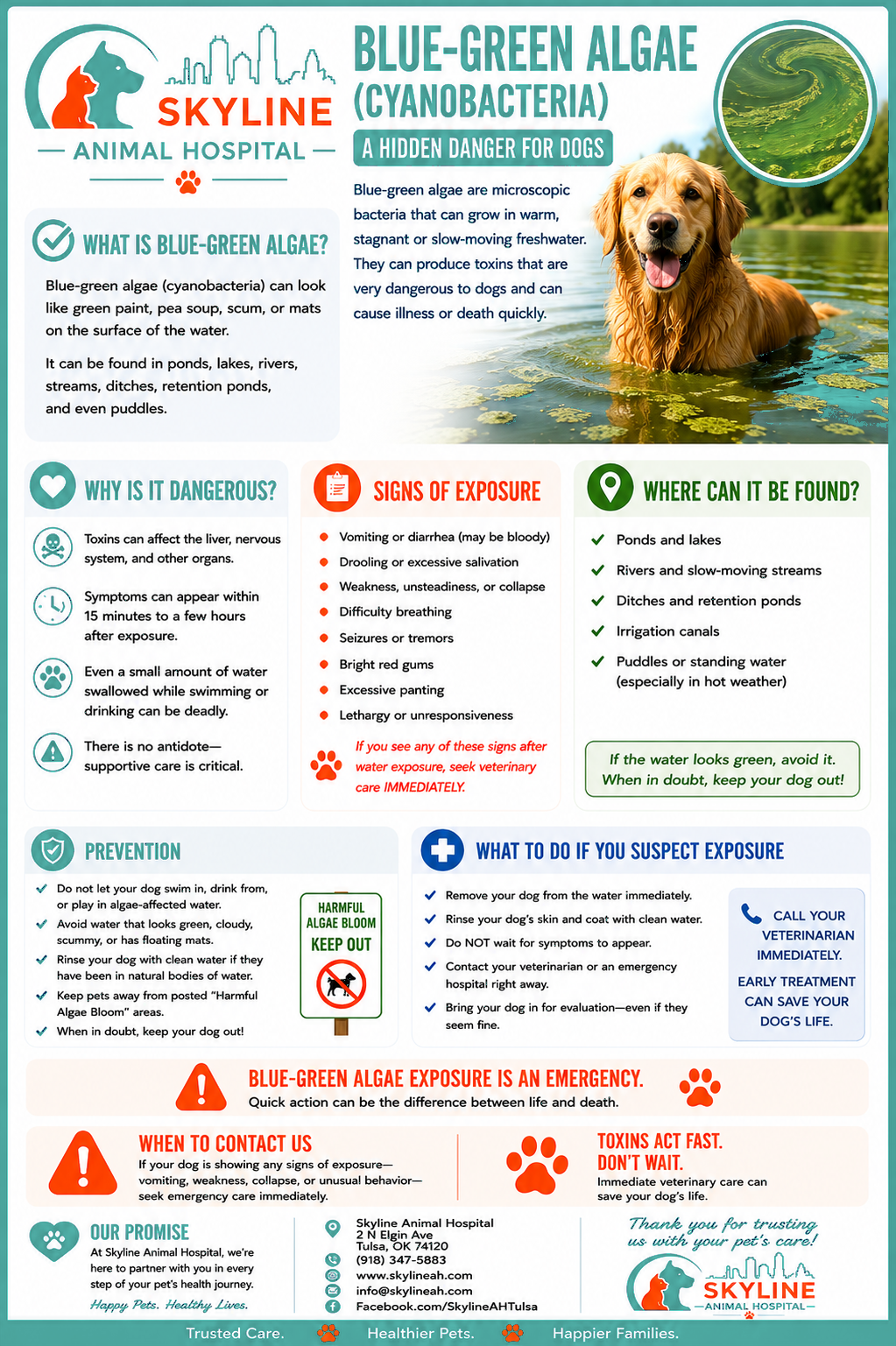
Blue-Green Algae (Cyanobacteria): A Hidden Danger for Dogs
Blue-green algae are microscopic bacteria that can grow in warm, stagnant or slow-moving freshwater. They can produce toxins that are very dangerous to dogs and can cause illness or death quickly.
Blue-green algae exposure is an emergency. Quick action can be the difference between life and death.
What Is Blue-Green Algae?
Blue-green algae (cyanobacteria) can look like green paint, pea soup, scum, or mats on the surface of the water.
It can be found in ponds, lakes, rivers, streams, ditches, retention ponds, and even puddles.
Why Is It Dangerous?
- Toxins can affect the liver, nervous system, and other organs.
- Symptoms can appear within 15 minutes to a few hours after exposure.
- Even a small amount of water swallowed while swimming or drinking can be deadly.
- There is no antidote. Supportive care is critical.
Signs of Exposure
- Vomiting or diarrhea (may be bloody)
- Drooling or excessive salivation
- Weakness, unsteadiness, or collapse
- Difficulty breathing
- Seizures or tremors
- Bright red gums
- Excessive panting
- Lethargy or unresponsiveness
If you see any of these signs after water exposure, seek veterinary care immediately.
Where Can It Be Found?
- Ponds and lakes
- Rivers and slow-moving streams
- Ditches and retention ponds
- Irrigation canals
- Puddles or standing water (especially in hot weather)
If the water looks green, avoid it. When in doubt, keep your dog out!
Prevention
- Do not let your dog swim in, drink from, or play in algae-affected water.
- Avoid water that looks green, cloudy, scummy, or has floating mats.
- Rinse your dog with clean water if they have been in natural bodies of water.
- Keep pets away from posted “Harmful Algae Bloom” areas.
- When in doubt, keep your dog out!
What to Do if You Suspect Exposure
- Remove your dog from the water immediately.
- Rinse your dog’s skin and coat with clean water.
- Do not wait for symptoms to appear.
- Contact your veterinarian or an emergency hospital right away.
- Bring your dog in for evaluation, even if they seem fine.
Call your veterinarian immediately. Early treatment can save your dog’s life.
When to Contact Us
If your dog is showing any signs of exposure, such as vomiting, weakness, collapse, or unusual behavior, seek emergency care immediately.
Call us right away at (918) 347-5883. If we are closed, see our emergency and after-hours referrals.
Toxins act fast. Don’t wait. Immediate veterinary care can save your dog’s life.