
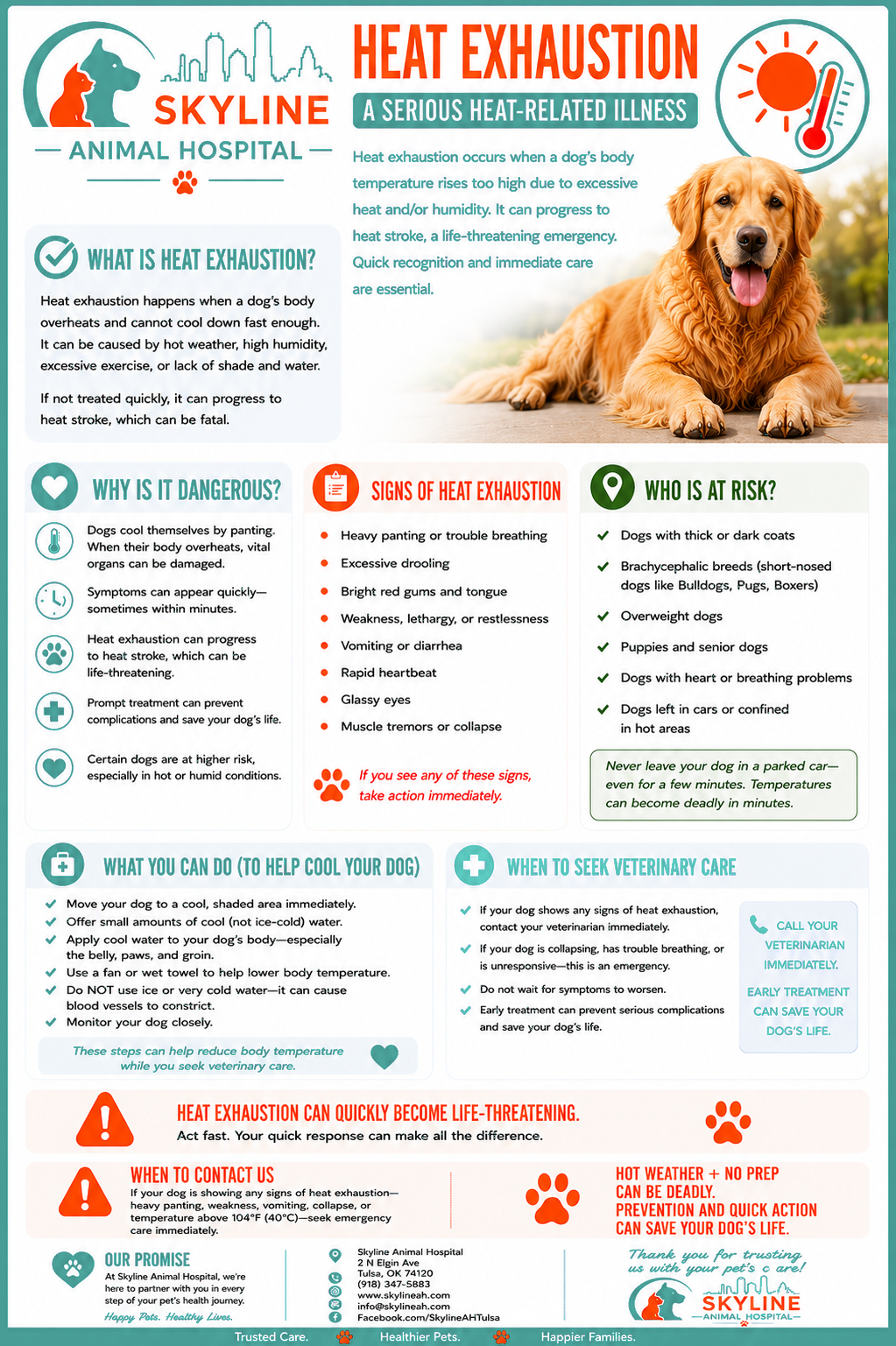
A Serious Heat-Related Illness
Heat exhaustion occurs when a dog’s body temperature rises too high due to excessive heat and/or humidity. It can progress to heat stroke, a life-threatening emergency. Quick recognition and immediate care are essential.
Heat exhaustion can quickly become life-threatening. Act fast. Your quick response can make all the difference.
What Is Heat Exhaustion?
Heat exhaustion happens when a dog’s body overheats and cannot cool down fast enough. It can be caused by hot weather, high humidity, excessive exercise, or lack of shade and water.
If not treated quickly, it can progress to heat stroke, which can be fatal.
Why Is It Dangerous?
- Dogs cool themselves by panting. When their body overheats, vital organs can be damaged.
- Symptoms can appear quickly, sometimes within minutes.
- Heat exhaustion can progress to heat stroke, which can be life-threatening.
- Prompt treatment can prevent complications and save your dog’s life.
- Certain dogs are at higher risk, especially in hot or humid conditions.
Signs of Heat Exhaustion
- Heavy panting or trouble breathing
- Excessive drooling
- Bright red gums and tongue
- Weakness, lethargy, or restlessness
- Vomiting or diarrhea
- Rapid heartbeat
- Glassy eyes
- Muscle tremors or collapse
If you see any of these signs, take action immediately.
Who Is at Risk?
- Dogs with thick or dark coats
- Brachycephalic breeds (short-nosed dogs like Bulldogs, Pugs, Boxers)
- Overweight dogs
- Puppies and senior dogs
- Dogs with heart or breathing problems
- Dogs left in cars or confined in hot areas
Never leave your dog in a parked car, even for a few minutes. Temperatures can become deadly in minutes.
What You Can Do to Help Cool Your Dog
- Move your dog to a cool, shaded area immediately.
- Offer small amounts of cool (not ice-cold) water.
- Apply cool water to your dog’s body, especially the belly, paws, and groin.
- Use a fan or wet towel to help lower body temperature.
- Do not use ice or very cold water. It can cause blood vessels to constrict.
- Monitor your dog closely.
These steps can help reduce body temperature while you seek veterinary care.
When to Seek Veterinary Care
- If your dog shows any signs of heat exhaustion, contact your veterinarian immediately.
- If your dog is collapsing, has trouble breathing, or is unresponsive, this is an emergency.
- Do not wait for symptoms to worsen.
- Early treatment can prevent serious complications and save your dog’s life.
Call your veterinarian immediately. Early treatment can save your dog’s life.
When to Contact Us
If your dog is showing any signs of heat exhaustion, such as heavy panting, weakness, vomiting, collapse, or a temperature above 104°F (40°C), seek emergency care immediately.
Call us right away at (918) 347-5883. If we are closed, see our emergency and after-hours referrals. Also read about car temperature trauma.
Hot weather plus no preparation can be deadly. Prevention and quick action can save your dog’s life.